
The Rope Bottom’s Guide
Receiving rope is a skill and a discipline you train, the way a top trains hands. It is not passivity, it is the harder half of the practice.
by CraigJustCraig
I'm not a doctor, and this is not medical advice. If something in your body stops working and doesn't come back, see a physician. We'll talk about reading your body here. We won't talk about ignoring a doctor.
Now. Let's talk about what you actually do down there.
Most of the rope world speaks about you. The tie went on you. The top read you. You were held. Listen to how the language works, and you start to sound like furniture. Beautiful furniture, witnessed and cared for, and furniture all the same.
You are not furniture. You are the other half of the practice, and yours is the harder half.
Receiving is a skill. It is a discipline you train, the way a top trains hands. Nobody hands it to you with the rope. The most common mistake in this whole practice is leaving the bottom uneducated, then calling bottoming passive, then acting surprised when it goes wrong. So here is the education. Written to you, as a practitioner.
Receiving Is Active
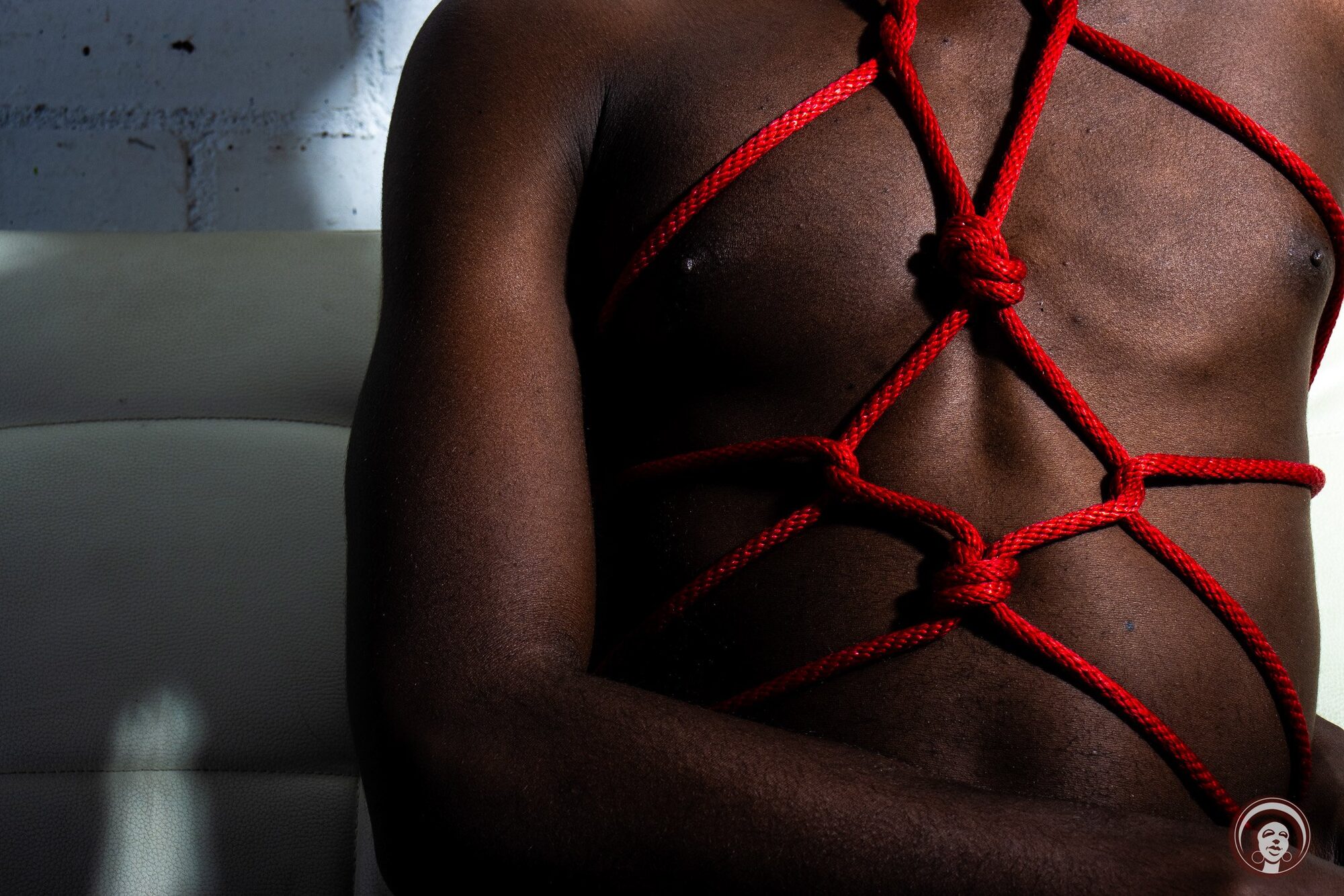
Strip the romance off it for a second. When you are in rope, you are the applied force. Your body is what the structure loads against. Your breath is what the tie has to accommodate. Your nervous system is doing more work in that stillness than the top's hands are.
Passive is the opposite of what's happening. You are holding a position, regulating a breath, tracking sensation across a dozen places at once, deciding moment to moment what to say and when. That is labor. Skilled labor.
The top builds the container. You do the work inside it.
This matters because the whole thing rests on what you can feel and what you can report. The top cannot feel your hands. They cannot feel the cold creeping into your fingers or the electric note running down your arm. Only you can. Your awareness is the safety system. Train it.

Before the Rope
You can't surrender from a body that's already braced. Most of what goes wrong in a scene was decided hours earlier, in what you ate, what you drank, and what state you walked in carrying.
Arm circles. Shoulder rolls. Thread the needle. Cat-cow. You're also introducing your own presence into the scene before anyone touches you. The work begins before the first knot.
Because It Does
The companion anatomy guide covers what the top owes you here, and it's worth reading first. This is your side of that conversation.
Old injuries. What your shoulders can and can't do overhead. The nerve that already tingles in that one position. Medications, conditions, anything that changes how your blood moves or how fast you might drop. A top can only tie around what they know about. The things you leave out of the negotiation are the things that find you mid-scene.
The version of you in deep rope cannot organize care. Decide now who checks on you, when, and how. Plan the check-in before the scene, not after. And say what you actually want. Alignment with the person tying you matters more than their resume. Find someone whose purpose meets yours, and a lot of the danger drops out before you ever start.
Safety isn't the absence of risk. It's the presence of trust.
The Philosophy Behind the Rope, by CraigJustCraig

You Are the Safety System
Here is the part nobody trains you in. Once the rope is on, you become the most accurate instrument in the room. Your job is to read yourself and report, clearly and early, without apology.
Read your own signals
Set a baseline before the rope goes on. Know what your hands feel like at rest, what a clean thumbs-up takes, how your breath sits. Then track the changes. The companion anatomy guide breaks down the wiring in full. Here is what you carry in your body.
- Median. Tingling in your thumb, index, and middle finger. Localized, electric, burning, or a patch gone quiet. That's nerve. Speak now.
- Ulnar. Tingling in your ring and little finger. Same rule. Speak now.
- Radial. A wrist that won't lift, a thumb that won't stand. Speak now.
- Circulation. The whole hand or limb going cold, fat, dull, aching, changing color. Speak now anyway. Lost circulation can hide a nerve problem underneath it.
- Movement tells the truth. If you can flex the hand back, bend it forward, and turn it toward the pinky, the wires are talking. Lose one of those motions and tell your top to get the rope off.
Don't shake out a numb hand and push through. Nerve damage stacks. The injury that surfaces in one ordinary scene was built across many quiet ones. Honor the first signal, not the last.
Feel the faint coming
Your body warns you before it drops. Learn the warnings and act on the first one. Tightness in the breath. Sweat coming up fast. Too much spit in your mouth. A ring in your ears, cotton in your ears, sounds starting to fade. Pressure building behind your face. Black spots at the edges. A creeping sense of disconnection, or just a flat feeling of wrongness. That last one counts. If something feels wrong and you can't name it, that is information. Say it.
Advocate without apologizing

"My pinky's going numb." "I need to come down." "Pause." No story, no softening, no waiting to be sure. You will never regret speaking a beat too early. You can absolutely regret speaking a beat too late. Your safe word is not a failure. The bottoms who scare me are the ones who stay quiet to protect the mood. Protect the body. The mood survives an honest word. It does not survive an injury. Your job is not to be easy to tie. Your job is to be honest about what's true in your body. Give them the data. Let them do their job with it.
When It Arises
Pain, numbness, a wave of emotion, a spike of panic. Knowing the difference, and knowing your move, is most of the practice.
Pain that's information, pain that's a warning
The good pain is the deep ache of a held position, the broad burn of a stretch, the heavy pressure of a band doing its job. Wide, dull, bearable, the kind that opens something when you breathe into it. You can ride it. The warning is different in texture. Bright. Specific. Electric. A single nerve lighting up, a sharp point that says here, this exact spot, now. You do not ride that one. You report it and you get the rope moved. Ask yourself honestly in the moment: is this pain, or is this fear wearing pain's clothes? Discernment is the skill. Build it scene by scene.
- Sensory splitting. Pull the layers apart. Focus on the heat, leave the ache alone.
- Altered focus. Move attention to a calm part of the body, the warmth of a hand, the weight of a foot.
- Transfer. Build a sensation somewhere neutral, then move it into the loud place.
- Mental anesthesia. Imagine the area going numb, a cool mist settling over it.
- Symbolic imagery. Give the pain a shape, a sound, a light, then turn the dial down.
- The inhale revs you up. The exhale settles you down. When sensation spikes, lengthen the exhale.
- Use the belly, not the chest. If the rope has your ribs, breathe in small sips.
- A pattern that settles the system: in for four, hold for two, out for four.
- Find your top's breath and match it. Two people breathing as one.
There's a move I keep coming back to. Place your pain in a chair across the room. Give it a name. Tell it: you may exist, but you do not get to lead. Even in pain, you are the one in control.
With every breath, feel the ground beneath you. With every exhale, release your thoughts and be in this moment.
The Philosophy Behind the Rope, by CraigJustCraig
Emotion and panic

The Skill of Surrender
Surrender is the part people think is the absence of skill. It's the highest skill in the practice. Letting go is a thing you train. It is chosen, prepared for, and practiced, the same as anything else. You don't fall into real surrender by accident, and you can't perform your way into it. You decide to stop carrying the weight, and you trust the person holding you to carry it for a while.
To submit is not to weaken; it is to choose surrender, knowing you are still sovereign.
The Philosophy Behind the Rope, by CraigJustCraig
You stay sovereign the whole time. That's the part that makes it work. You are not handing yourself over and disappearing. You are making an active choice to release, again and again, with the safe word still in your mouth and your awareness still online. Surrender and control live in the same breath. So do pain and pleasure, resistance and release. You learn to hold the contradiction instead of solving it.
There's a specific place to aim for. The edge of resistance. The top brings the tension up until it verges on too much, then eases back to where the body is held but not strained. That's the spot where you yield without recoiling. Find it together, talk through it, and you've found where trust actually lives.
When the body finally stops fighting, something opens. The thoughts quiet. The weight comes off. You get to rest inside the knowledge that someone else is holding now. That rest is not nothing. For a lot of people it's the first real rest they've had in a long time.
Integration Is Part of the Practice
Your body keeps processing for hours, sometimes days. The skin, the nervous system, the heart. Treat the after as part of the work, because it is.
- The fastest way to faint is to rush out of rope and stand up too quick.
- Come up slow. Stay seated. Water. Something to eat, something sweet if you can.
- Let the system catch up before you ask it to stand.
- On melanated skin the marks linger longer, darken more easily, take more work to fade.
- First day or two, go anti-inflammatory. Arnica, an Epsom soak, aloe.
- Once the skin closes, gentle acids that are kind to darker skin do the fading work. Daily sunscreen.

Drop can land hours or days later. Trouble concentrating, fatigue, a flat sadness or anxiety that doesn't match your day, guilt, irritability, an ache that lingers. This is partly chemical. Your body ran a neurochemical marathon and now the levels are settling. Name it when you feel it. That alone takes some of its power. Then treat it like the physical event it partly is. Food, water, warmth, rest, gentle movement, contact with someone who gets it. This is why you planned the check-in before the scene.
Let the meaning settle. Something moved in there. Give it room to land before you reach for the tidy story of what it meant. Sit with it. Sleep on it. Let the body finish saying what it needed to say. Sometimes the integration is the quietest part and the most important. You went somewhere, you came back, and you came back more whole than you left. The flame didn't burn you. It showed you something.
What You're Building
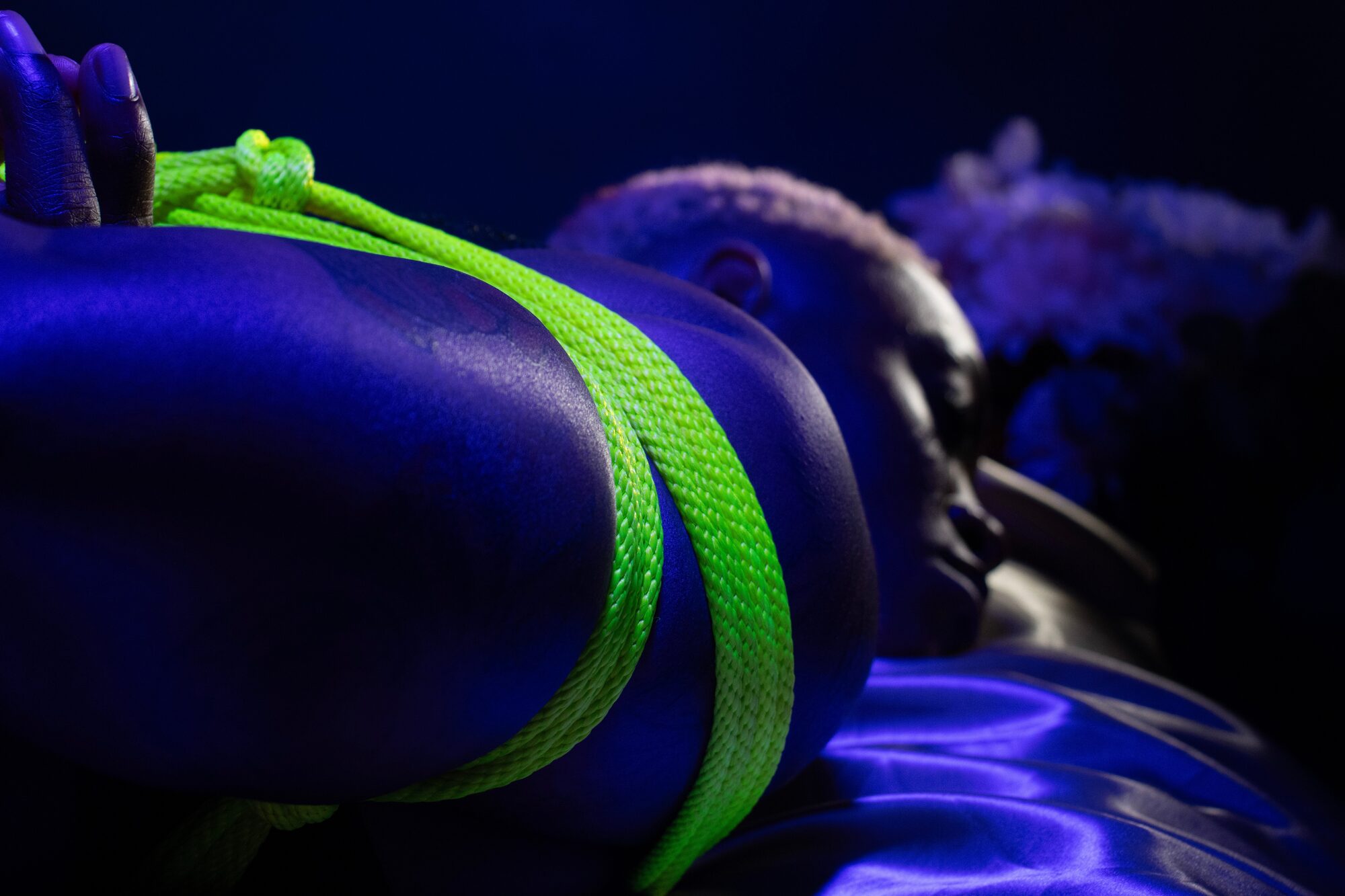
Everything above keeps you safe and keeps you sovereign. It also builds something. You are not just surviving rope. You are using it. The same nervous system that can faint, the same nerves that can be pinched, the same breath the tie cuts short. That's the instrument the whole practice is played on, and you are learning to play it.
Your body is more than a vehicle, it is an archive. Our fascia holds memory, our nervous system catalogs our experience, and our posture encodes both our past and our potential.
The Philosophy Behind the Rope, by CraigJustCraig
This is interoception. Looking inside. It's the only door to the emotional brain, and rope holds it open. The stillness pins you to the present. The sensation gives your scattered attention one undeniable thing to land on. And in that held, undeniable place, the body starts to learn what it forgot. That safety is possible. That holding doesn't have to hurt. That surrender can be healing. The body begins to feel like home again.
That's the receiving. That's the discipline. Not a thing done to you. A thing you do. Train it like the practice it is.
You are the other half of the practice, and yours is the harder half. You learn to prepare the body, advocate for it mid-scene, read your own signals, work with what arises, surrender on purpose, and integrate after. None of it is done to you. All of it is yours to do.
I'm not a doctor and this isn't medical advice. It's harm reduction from inside the practice. If numbness lingers, if something stops working, if you faint in ways you can't explain, see a medical professional. Speaking up is the whole skill.
Listen beneath the skin.
Ashe.
Resources
Want the long version? It's the spine of my book. How the body speaks the language of the soul. Start here, then keep going.
From the practice
- The Philosophy Behind the Rope · by CraigJustCraig, the long version of all of this
- Rope and Anatomy: A Somatic Guide · the companion to this guide, written for the top and for the body itself
- What to Expect in a Session · new to all of this? Start here
- Come to a Class · if you'd rather learn it in the room
For rope bottoms (and everyone)
- The Rope Bottom Guide by Clover · free PDF
- Ask a Rope Bottom and Rope Bottom's Share Group on FetLife
- Rope Study and Shibari Study · free safety and somatics courses