
Beauty is discovered.
We find what is already there. We do not manufacture it and we do not paint it on in post.
The constant beneath the work
A shoot has a month. A theme has a season. The water dries, the location changes, the rope comes down and the room goes quiet again. Every editorial we make is a single breath in a longer life.
This page is the life. It holds the beliefs, the visual language, the rules we keep, and the way we see. It does not document a single photograph. It explains why every photograph feels the way it does.
Read it as the ground everything else stands on. When a new editorial arrives, it should already belong here. When a collaborator asks what C4 Suspension is, this is the answer that does not expire.
What we believe
Before the camera, before the rope, there is a way of seeing. Open each one. These are not definitions. They are positions we work from.
Rope is a conversation held in the body. It is the oldest way two people have of saying I have you, and I am not letting go. It carries weight and it carries meaning. In our work it is never decoration. It is the line that connects a person to their own surrender and to the one holding them there.
Intimacy is being seen without performing. It is the moment a person stops arranging themselves for the lens and simply exists in front of it. We do not stage intimacy. We make room for it and we wait. When it arrives, everyone in the room feels the temperature change.
Beauty is what is already true about a person, found rather than added. It lives in a collarbone, a held breath, a scar, the way someone closes their eyes when the weight settles. We do not build beauty in editing. We uncover it in the moment and protect it afterward.
Vulnerability is the courage to be unguarded on purpose. It is a choice, never an accident, and it is sacred because it can be betrayed. A person who lets themselves be vulnerable in our work is trusting us with something real. The whole practice exists to honor that trust.
Eroticism is aliveness, not exposure. It is charge, attention, the electricity of being fully present in a body. It can exist with no skin showing and vanish completely in a nude. We chase the current, the held look, the breath that catches. We never confuse it with shock.
Surrender is strength choosing to rest. It is a person deciding to stop carrying themselves and let the rope, the moment, and the people around them hold the weight. It is one of the bravest things a body can do, and it only happens where there is safety. We build the safety so the surrender can be real.
Trust is the entire foundation. Without it there is no rope, no surrender, no image worth keeping. Trust is earned slowly, in small kept promises, and it can be lost in a single careless moment. We treat it as the most valuable thing on set, more valuable than any frame.
Freedom is what surrender returns to a person. There is a particular freedom that arrives only after you have let go completely. The body lifts, the mind quiets, and something held tight for years loosens. Our images of suspension are really images of that freedom. The rope is how we reach it.
Black embodiment in our work is presence as reverence. It is Black bodies pictured as altars and instruments of spirit, lifted into freedom rather than weighed by the history of how they have been shown. We photograph skin as history and home, never as a thing to be lit pale or corrected. The dignity is the point.
Community is the circle that makes the work possible and the reason it matters. Riggers, models, photographers, witnesses, and participants are not crew filling roles. They are people holding each other. Every editorial is made by a community and made for one, and the care between them is visible in the final image.
How we work
Eight rules we do not break. They decide what we shoot, what we keep, and what we let go.
We find what is already there. We do not manufacture it and we do not paint it on in post.
A real moment slightly out of focus beats a flawless frame with nobody home in it. We chase presence first.
The rope is there to open a person up, to show what they are feeling, not to hide them or dress the frame.
If a beautiful image says nothing, we let it go. The feeling decides the frame. The frame serves the feeling.
Water, field, wall, and light are part of the cast. We work with the place instead of pasting people onto it.
Lived rather than staged. We want frames that look remembered, like a real moment someone walked into.
We follow the light the day gives us and let it shape the meaning. We rarely fight it into something it is not.
A quiet change in a person is worth more than a dramatic stunt. We photograph what shifts, not what shows off.
Recurring symbols
The same elements return across our work because they carry meaning. When you see them, this is what they are saying.
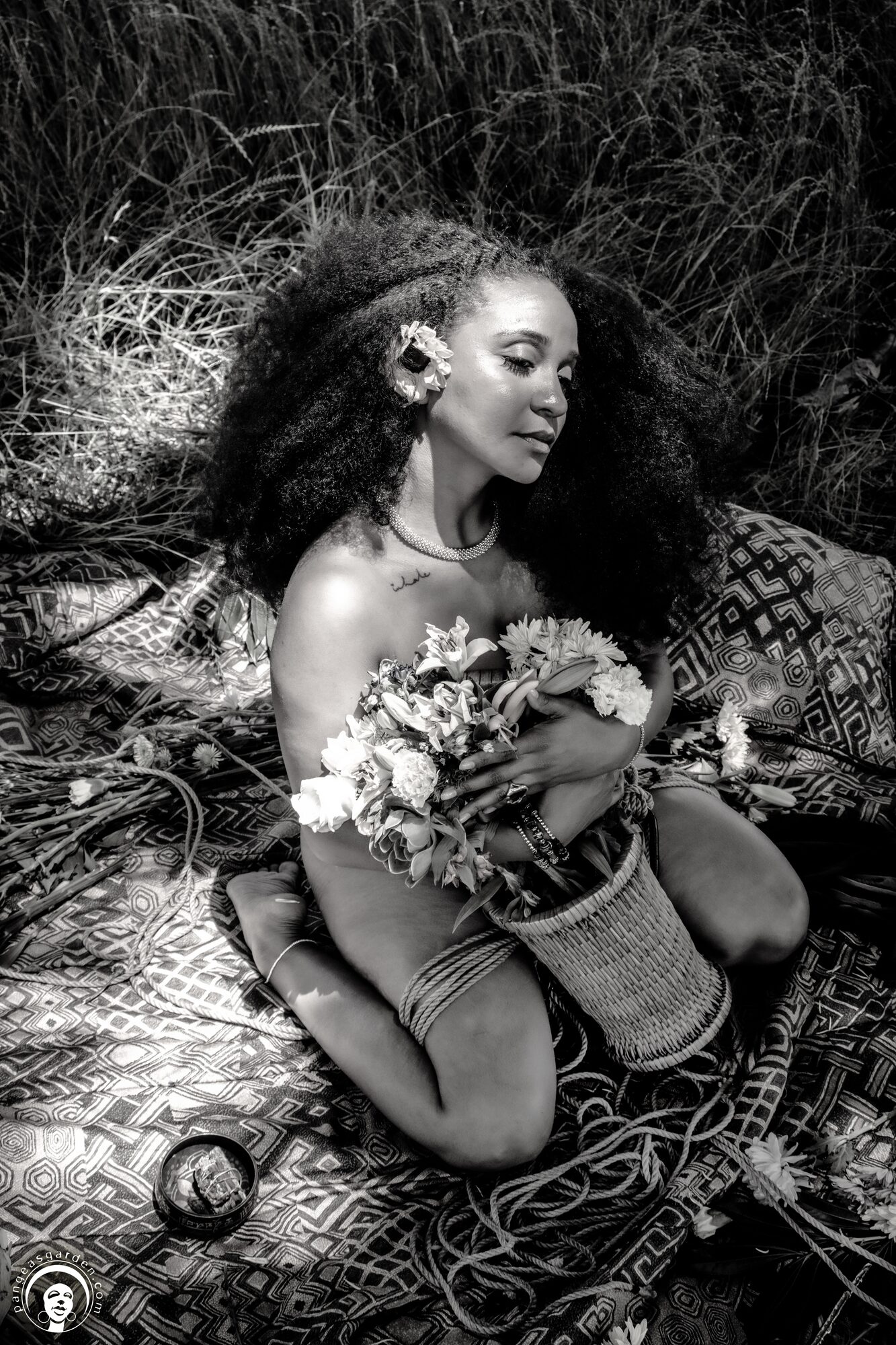
Reflection · Memory · Transformation
Water holds the past and gives it back changed. It softens a body and doubles it. When water is present, the image is about what is being washed away and what rises up new.
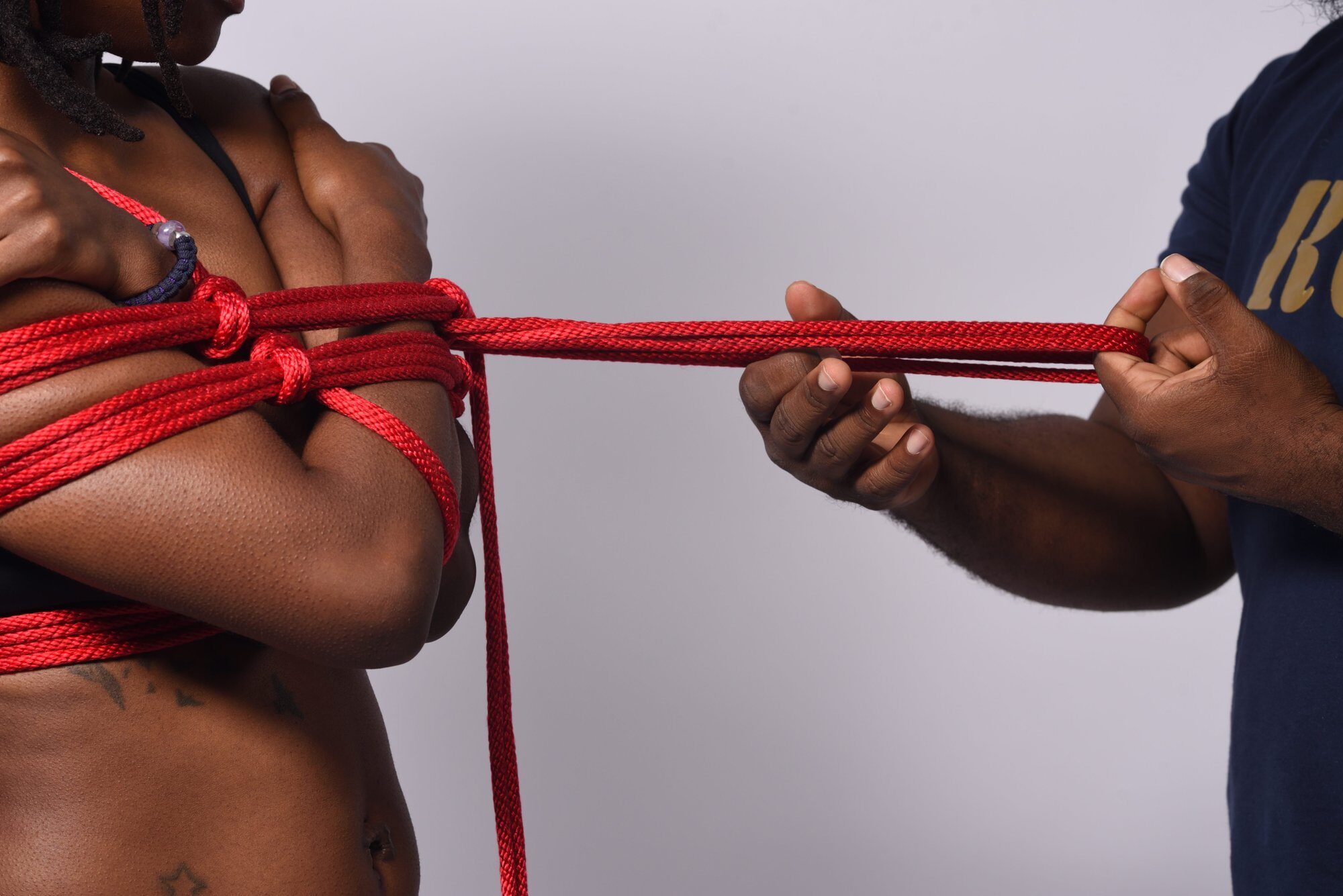
Trust · Connection · Choice · Safety
The rope is the spine of the practice. It is the line between two people and the proof of a choice freely made. It says someone is held, on purpose, by someone they trust.
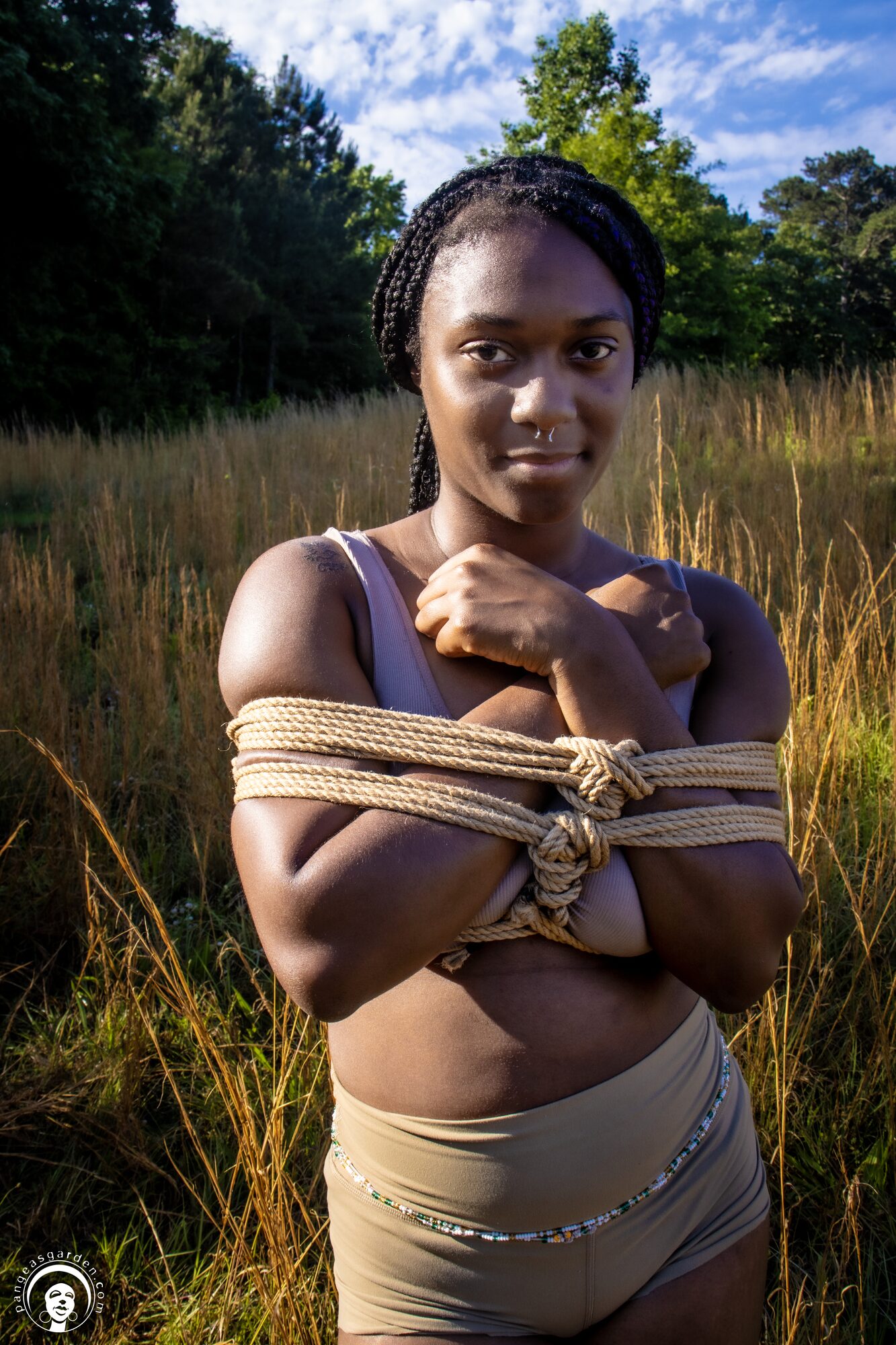
Revelation · Hope · Truth
Sunlight shows things as they are. It warms skin, finds edges, and refuses to lie. When the light is honest and low, the image is telling the truth about a person.
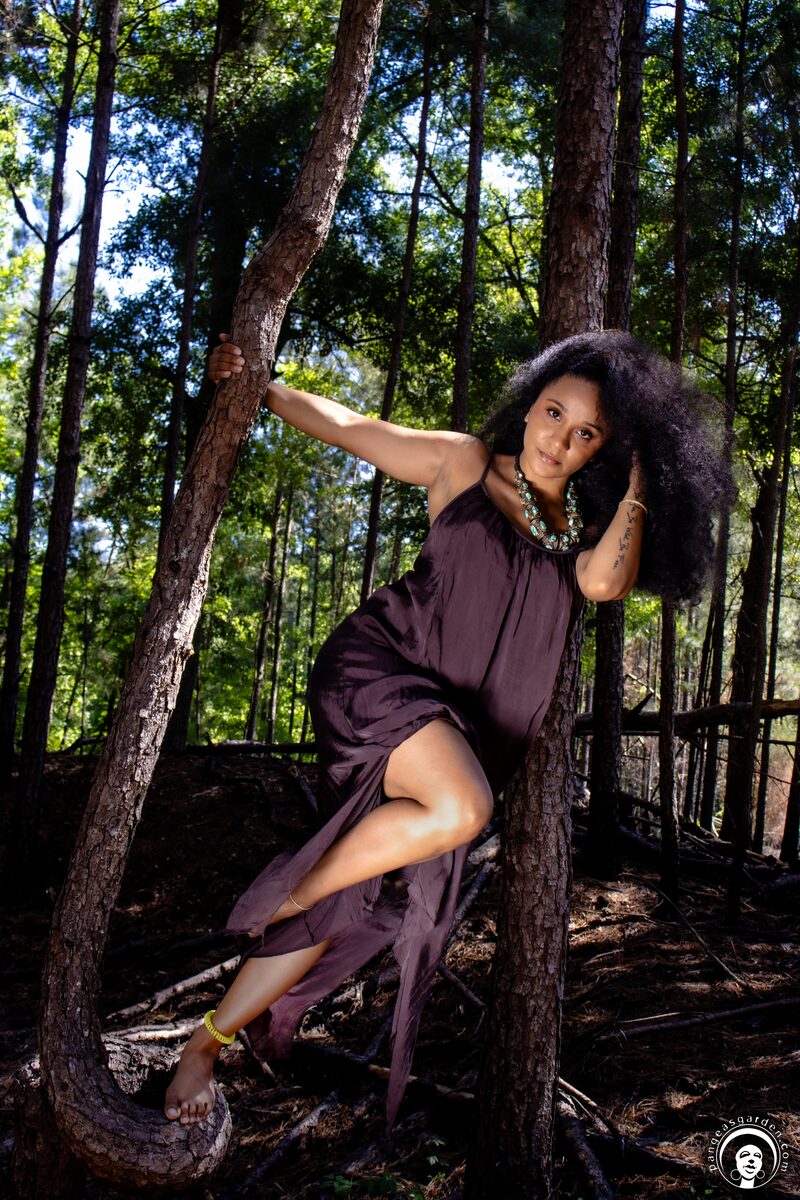
Movement · Breath · Impermanence
Wind is the reminder that nothing stays. It moves hair and cloth and carries breath. When the air is alive in a frame, the image is about a moment that will not come back.
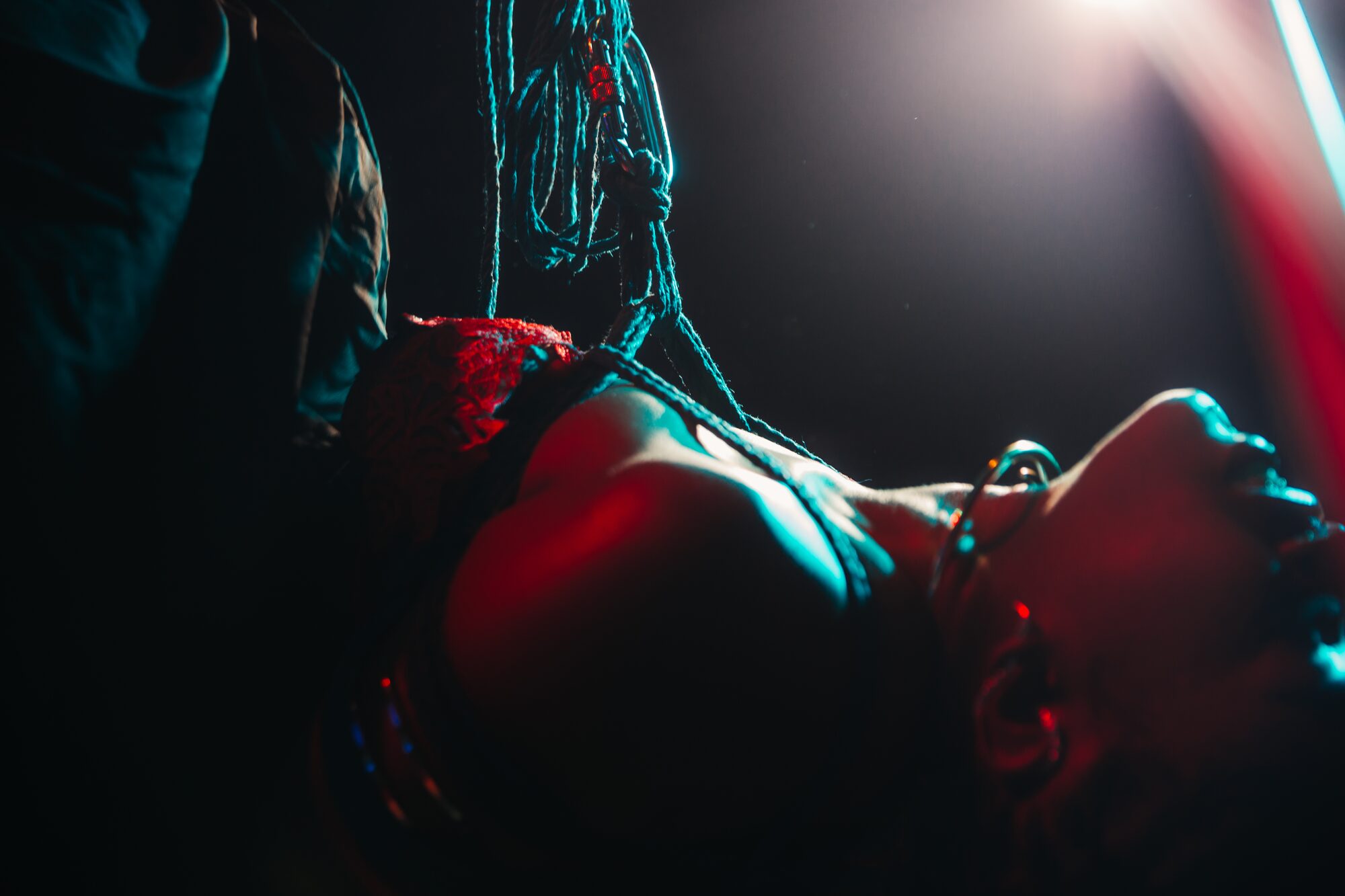
Mystery · Transition · The unseen
Smoke and shadow are the parts we do not explain. They hold the threshold between one state and the next. What stays hidden is doing as much work as what is lit.
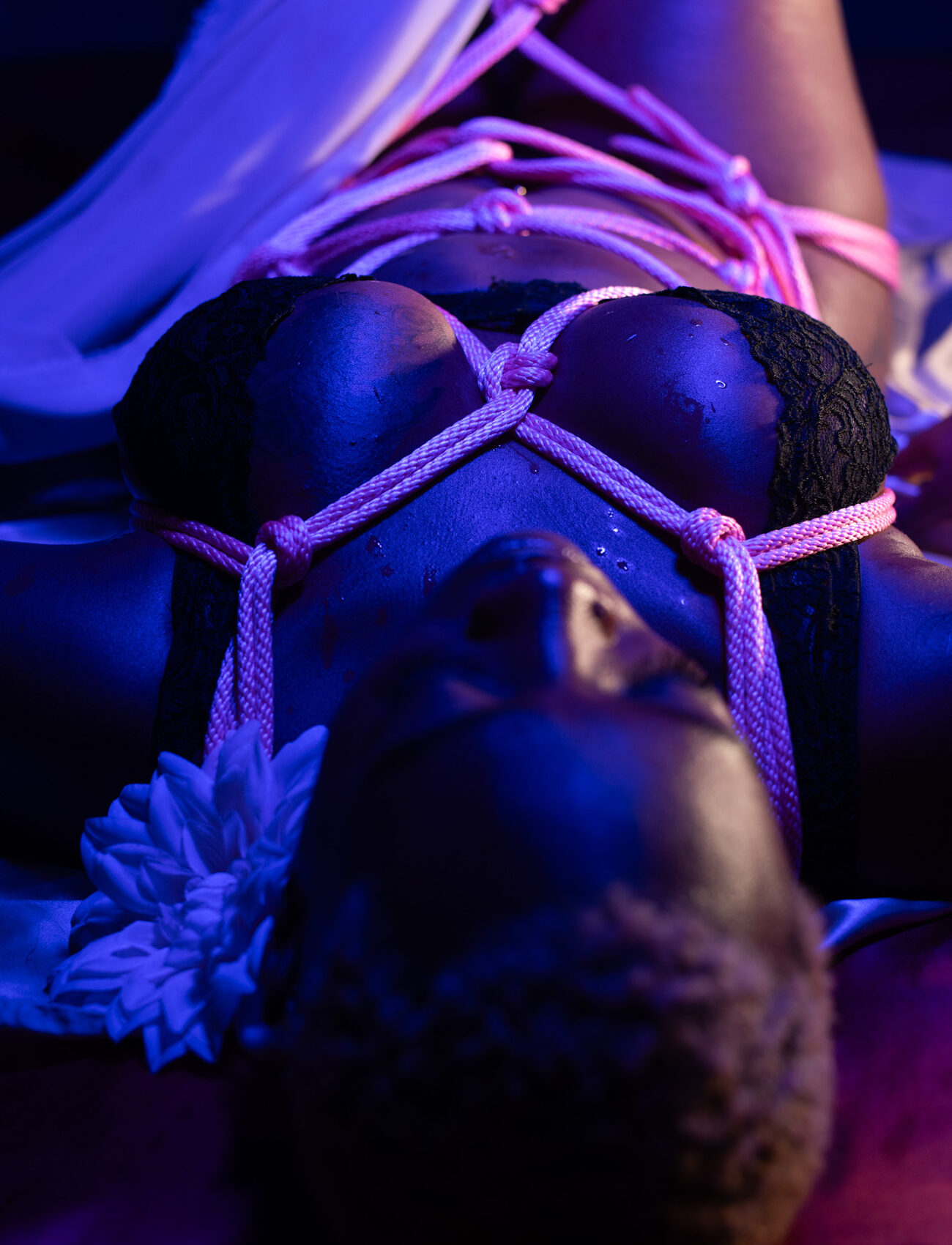
Emergence · Beauty · Growth
A flower is something tender that pushed its way into being. It marks the place where new life is welcomed. When flowers appear, the image is about emergence, about something arriving.
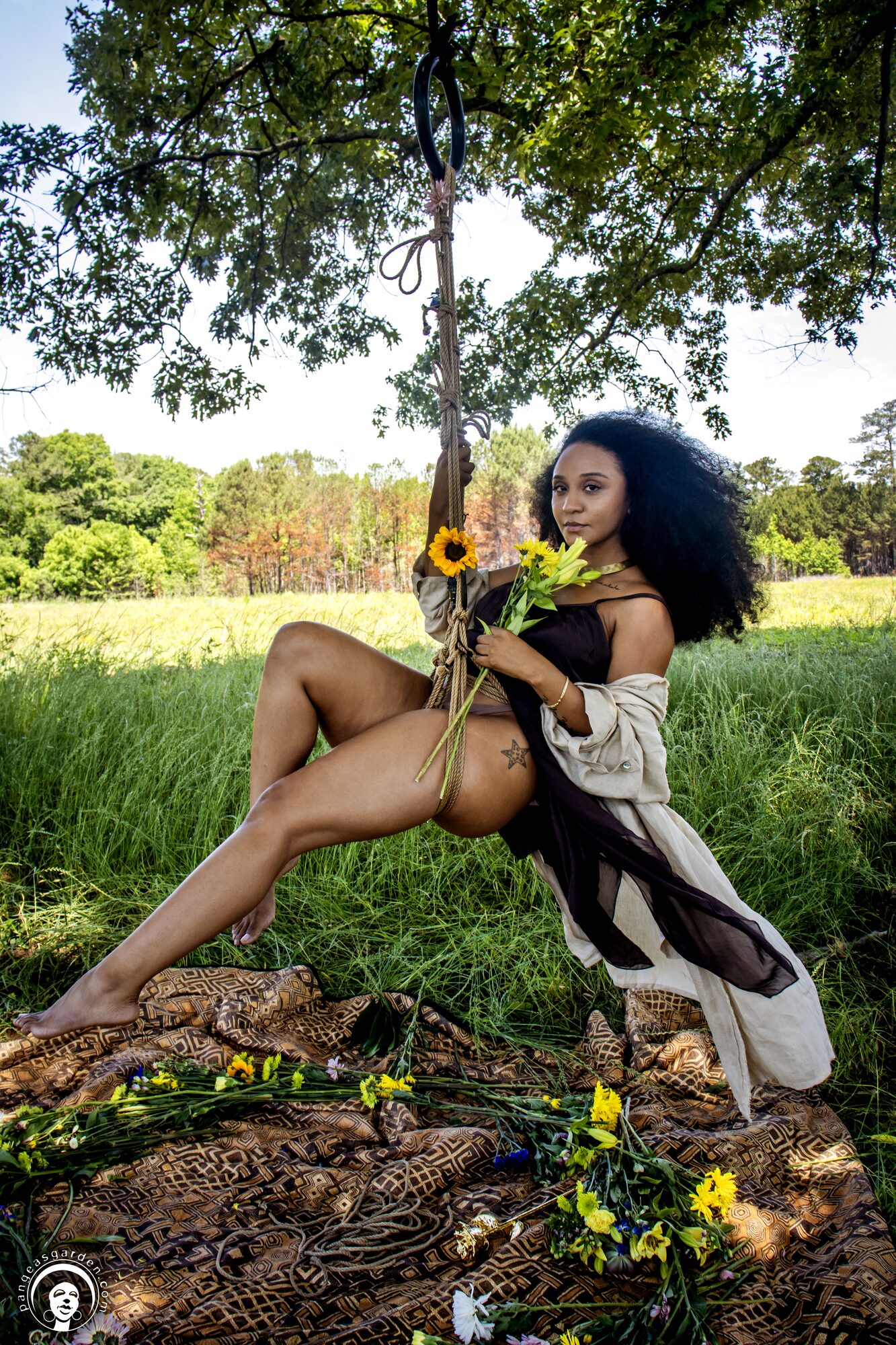
History · Presence · Home
Skin is where a person keeps their story. Every mark, line, and tone is record and residence. We photograph it as home, never as a surface to correct.
How we frame
Distance is emotion. Every choice of how close to stand is a choice about what the viewer should feel.
How we arrange the frame
Where things sit in the frame is where the feeling sits in the viewer. Each arrangement creates an experience before a single word is read.
Room to breathe. Emptiness around a figure gives the eye rest and the moment weight. It says this person is alone with something large.
Stillness and certainty. A subject placed dead center feels held, grounded, and sacred, like an altar at the heart of the room.
Depth of feeling. Foreground, figure, and far distance stacked together make the viewer feel they are looking into a real world, not at a flat one.
Immersion. When the eye can travel from near to far, the body enters the scene instead of watching it from outside.
Order and reverence. A balanced frame feels deliberate and calm, the visual language of ritual and respect.
Tension and life. An off-balance frame holds energy, like a moment caught mid-motion that could tip either way.
Pull and intention. Rope, limbs, and horizon guide the eye exactly where the feeling lives, and make the viewer arrive there themselves.
Mystery and universality. A figure reduced to its shape becomes everyone and no one, a body lit from behind by something it is moving toward.
Doubling and memory. A figure repeated in water or glass asks the viewer to hold two truths at once, the self and its echo.
Light as feeling
We do not light for exposure. We light for emotion. Each quality of light says something the subject cannot say out loud.
Tenderness and safety. It wraps a body without judgment, the light of care and of being held gently.
Truth and intensity. It carves edges and refuses to flatter, the light of confrontation and of nothing hidden.
Grace and arrival. The warm low sun forgives everything it touches. It is the light of homecoming and of a day letting go.
Transcendence. Light pouring from behind turns a figure luminous, as though lit by what it is rising toward.
Anonymity and awe. The body becomes pure shape against brightness, a presence felt more than seen.
Interior and unknown. What the dark holds is the part of a person still becoming. Shadow gives the frame a private room.
Memory and depth. Light bouncing through water and glass layers a scene with echoes, making the present feel haunted by the past.
The palette
Color is mood before it is decoration. These are the tones we return to and the feeling each one carries into a frame.
Reverence and worth. The light of the sacred. We use it for warmth, for haloes, for the sense that what we are looking at matters.
Golden-hour skin, lamplight, the glow on a held figure.
Depth and protection. The dark we let things rest in. It holds mystery and gives every other color somewhere to stand.
Negative space, night suspensions, the room around the light.
Clarity and breath. The pause, the clean light, the empty page. It marks stillness and a fresh beginning.
Cloth, paper, sunlit haze, the calm after surrender.
Warmth held over time. Slower than gold, like firelight or memory. It carries comfort and a little ache.
Dusk, candle glow, warm shade on skin.
Charge and devotion. Blood, rope, desire, and life. The most alive color we own, used where the feeling runs hottest.
Red rope across skin, lips, the heat of a held look.
Quiet and distance. The cool of water and evening. It cools a frame toward reflection and a little solitude.
Lake water, blue hour, the calm before or after.
Growth and grounding. The living world, the field, the place a body returns to. It says rooted and alive.
Meadow, leaves, the outdoor shoots in bloom.
Spirit and threshold. The color of ritual and the in-between. It marks transformation and the edge of the unseen.
Violet rope, dusk sky, the moment between states.
What the eye can feel
Texture is how a photograph reaches the body. Before a viewer understands an image, their skin already knows whether it is rough or soft, warm or cold. We treat every surface as part of the story.
Rope against skin is the whole practice in a single contact: the rough holding the soft, the made thing pressed into the living one. We keep that contrast visible. The mark it leaves is not damage. It is proof a moment happened.
The body in motion
A still photograph can hold motion. The shape a body makes is a sentence. These are the verbs we photograph.
Wanting. The body extending toward something it has not yet reached.
Release. The moment of letting go entirely, weight given to the rope and the ground.
Hope. The body lifting, leaving the floor, beginning its ascent.
Freedom. Suspended and weightless, the moment surrender becomes flight.
Devotion. Stillness under tension, the strength of staying with something difficult.
Change. The body pivoting toward or away, a decision made in motion.
Opening. The line of the body lengthening, vulnerable and unguarded.
Presence. No motion at all, the loudest movement of them all when it is chosen.
Surrender to gravity. The body giving in to the pull, soft and continuous.
Life. The smallest movement, the proof that the moment is real and ongoing.
Connection. One body meeting another, the gesture that carries the whole relationship.
How we name the work
We do not call our work beautiful, sexy, or dramatic. Those words say nothing. We name what an image actually does to the person looking at it.
The held breath of seeing something you did not expect to be moved by.
Care given fully and on purpose, with nothing held back.
The lean forward, the wanting to know what happens next.
Reaching for something not yet here. The ache that pulls a frame open.
The relief of being somewhere you are wanted exactly as you are.
The quiet that lets a body finally put its guard down.
The stillness of looking inward, of meeting yourself in the image.
Strength that does not need to raise its voice. Authority at rest.
The strength it takes to yield, given freely to someone trusted.
Aliveness with no apology. Light breaking across a face.
The exhale after holding on too long. Weight finally set down.
Lightness in the middle of something serious. Permission to smile.
The before and after held in one frame. A person who has changed.
The whole foundation, made visible in a hand that does not let go.
Fully here, nowhere else. The rarest and most photographable thing of all.
After the shutter
We edit for atmosphere, never for perfection. The goal is to protect what was true in the room, not to replace it with something smoother.
Texture stays. Pores, tone, and the real surface of a body are left intact. Plastic skin is a lie we refuse to tell.
A scar is a story the body chose to keep. We keep it too. Erasing it erases the person.
The marks rope leaves are evidence of a real moment. They are honored, never smoothed away.
We remove a stray hair or a dust speck. We do not reshape bodies or rebuild faces. The person who showed up is the person in the frame.
Color follows the light that was actually there. We grade for mood, not for a filter that could live on any photograph.
If an edit makes the image prettier and less true, we do not make it. Truth wins every time it conflicts with polish.
We never brighten, desaturate, or correct Black skin toward something else. We grade to honor it as it is. This rule has no exceptions.
How we tell it
The words around our images follow the same rules as the images. Here is how we write.
We write what we have felt and seen, not what sounds impressive. The page should smell like the room.
The weight, the warmth, the catch of breath come first. Ideas arrive after the body does.
We never reach for shock to hold attention. The truth is already enough to keep someone reading.
No one in our writing is a thing to be looked at. Everyone is a person with an interior life.
Rigger, model, witness, reader. Each one is given their full dignity on the page.
Specific over vague. A red rope, not a sense of tension. The real detail carries the feeling.
We leave space. Not every moment needs a sentence. The pause does work that words cannot.
Plain words said with care beat clever words said to impress. If it can be simpler, we make it simpler.
The shape of every story
Our editorials follow the same emotional arc, because it is the arc of the experience itself. It moves in one direction, and it always returns the person changed.
Someone steps into the space and into the moment. The world narrows to this room.
The first opening. A wondering about what could happen here, and a willingness to find out.
The offer is made and accepted. Consent given clearly, the door held open from both sides.
Two people meet in the work. The rope, the look, the trust that lets the rest happen.
The turning point. Something held tight finally lets go, and the person is no longer who they were.
The quiet at the top of the breath. Suspended, weightless, with nothing left to do but be.
The looking back. What just happened settles into meaning while the body is still warm.
The rope comes down. The weight returns to the floor. The descent is as cared for as the lift.
The person carries the experience back into their life. The story does not end at the door. It becomes part of them.
The boundaries
A practice is defined as much by its refusals as by its work. These lines do not move.
We never fake intimacy.
We never chase shock.
We never prioritize aesthetics over consent.
We never erase Black skin through editing.
We never manufacture emotion.
We never photograph people as objects.
We never sacrifice dignity for attention.
Before any image is made
Five questions. Every photograph, edit, and story passes through them first. If the answer is no, we do not make it.
Does this deepen the story?
Does this honor the people involved?
Is it emotionally truthful?
Does it align with our philosophy?
Would someone recognize this as C4 Suspension without seeing the logo?
This page is the ground beneath every editorial. When the concept of the month is long gone, this is what remains.
Return to the beginningFormspree submission
Complete the form and submit without leaving this page.